

IEM Salt Lake for Nepali Students: Complete Admission Guide 2026 - Nepal Quota, Fees & Career Prospects
IEM Salt Lake for Nepali Students: Complete Admission Guide 2026 - Nepal Quota, Fees & Career Prospects
🗓️
Nov 28, 2025
Register Now for Admission 2026
Note : We connect you with colleges and support your next steps.
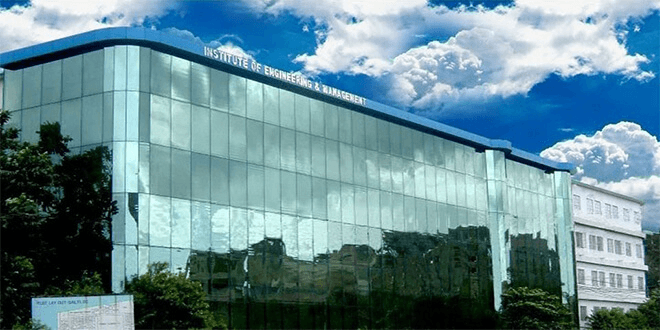
IEM Salt Lake for Nepali Students: Complete Admission Guide 2026 - Nepal Quota, Fees & Career Prospects
If you're a Nepali student dreaming of quality engineering education in India without breaking the bank, Institute of Engineering and Management (IEM) Salt Lake in Kolkata might just be your perfect destination.
This comprehensive guide covers everything you need to know about securing admission at IEM Kolkata under the Nepal quota—from application procedures to fee structures, career prospects, and why this college stands out for international students from Nepal.
Why IEM Salt Lake is Perfect for Nepali Students
Before diving into admission details, let's understand why hundreds of Nepali students choose IEM Kolkata every year over other engineering colleges in India.
Geographic and Cultural Proximity
Kolkata isn't just geographically close to Nepal—it's culturally connected. The city has a significant Nepali community, making the transition much easier for students from Kathmandu, Pokhara, or other Nepali cities.
You'll find Nepali restaurants, cultural associations, and fellow countrymen who understand your background.
The proximity means affordable travel costs. A flight from Kathmandu to Kolkata takes just about an hour, and flight tickets range from USD 100-150 round trip. During festivals like Dashain or Tihar, you can easily visit home without spending a fortune or missing too many classes.
Established Legacy and Recognition
Founded in 1989, IEM Salt Lake holds the distinction of being West Bengal's oldest private engineering college.
This three-and-a-half-decade legacy means established systems, strong alumni networks, and proven track records—things that matter when you're investing in education abroad.
The college holds NAAC 'A' Grade accreditation with a score of three point two five, demonstrating commitment to quality education.
Multiple departments including Computer Science Engineering, Information Technology, and Electronics and Communication Engineering are NBA accredited, which adds international recognition to your degree.
Affordable Quality Education
The fee structure is reasonable compared to other private engineering colleges in India, and critically, there are no extra charges for Nepal quota students.
You pay the same fees as domestic students, which is approximately eight lakh sixty-five thousand Indian rupees (around USD 10,400) for the complete four-year BTech program.
Compare this to studying in countries like the USA, UK, or Australia where annual tuition alone can exceed twenty to thirty thousand US dollars, and you'll see why IEM offers exceptional value.
No Management Quota Premium
Management quota seats typically cost significantly more than regular counseling seats. At premier private colleges, Indian students often pay premiums of five to fifteen lakh rupees extra to secure seats through management quota routes, especially for popular branches like Computer Science Engineering.
Nepali students have access to dedicated Nepal quota seats without these additional charges. This represents massive savings while securing the same quality education and degree.
Understanding the Nepal Quota System
The Nepal quota is a special provision at IEM Kolkata that reserves seats specifically for students from Nepal.
This quota operates under NRI and Foreign Students category but is distinct from the standard NRI quota that typically involves higher fees.
How Many Seats Are Available?
IEM Salt Lake has substantial seat allocation for Nepali students across various engineering branches.
The availability is good across branches including:
Computer Science and Engineering (CSE)
Computer Science with Artificial Intelligence and Machine Learning
Information Technology
Electronics and Communication Engineering
Electrical and Electronics Engineering
Electrical Engineering
Mechanical Engineering
Civil Engineering
Fee Structure: Same as Domestic Students
Nepal quota students pay approximately eight lakh sixty-five thousand rupees for the entire four-year BTech program. This translates to roughly ten thousand four hundred US dollars at current exchange rates.
Breaking this down annually:
Annual tuition: Approximately two lakh sixteen thousand rupees (USD 2,600)
No additional charges for Nepal quota status
Same facilities and rights as domestic students
Important Note: While the fees are charged in Indian rupees, you'll need to arrange payment through proper banking channels. The approximate USD equivalent can fluctuate based on exchange rates, but typically remains around the ten to eleven thousand dollar range for the complete program.
Additional Costs to Budget For
Hostel Accommodation
Non-AC rooms: Approximately one lakh to one point zero five lakh rupees per year (USD 1,200-1,300)
AC rooms: Approximately one point six six lakh rupees per year (USD 2,000)
Includes furnished rooms, Wi-Fi, basic amenities
Mess Charges
Three meals daily
Approximately thirty-five to forty thousand rupees per year (USD 420-480)
Vegetarian and non-vegetarian options available
Other Expenses
Books and study materials: Ten to fifteen thousand rupees yearly (USD 120-180)
Personal expenses: Twenty to thirty thousand rupees yearly (USD 240-360)
Travel (Kolkata-Nepal): Fifteen to twenty thousand rupees yearly (USD 180-240)
Total Annual Budget: Approximately three point five to four lakh rupees (USD 4,200-4,800) including everything.
Eligibility Criteria for Nepali Students
Academic Requirements
Class 12 or Equivalent: Must have completed higher secondary education (10+2 or equivalent) from a recognized board in Nepal.
Subject Requirements:
Physics: Mandatory
Chemistry: Mandatory
Mathematics: Mandatory
English: As language subject
Minimum Marks:
For CSE, IT, AI-ML branches: Sixty to sixty-five percent aggregate
For ECE, EEE branches: Fifty-five to sixty percent aggregate
For ME, Civil branches: Fifty to fifty-five percent aggregate
The specific requirements can vary slightly, so verify exact percentages during application.
Age Criteria
Students must be between seventeen and twenty-five years of age as of July thirty-first of the admission year.
There's no upper age limit specified for mature students, but the seventeen-year minimum is strictly enforced.
Nationality and Documentation
You must be a Nepali citizen with a valid Nepali passport.
Unlike some colleges that require lengthy visa processing before admission, IEM's process is streamlined for Nepali students given the special India-Nepal relationship and open border arrangement.
No Entrance Exam Required
Nepal quota students do NOT need to appear for WBJEE (West Bengal Joint Entrance Examination), JEE Main, or IEMJEE (IEM's internal entrance test).
Admission is based purely on your Class twelve marks and document verification.
This eliminates months of entrance exam preparation stress and the uncertainty of competitive examinations.
Your academic performance in higher secondary determines admission.
Step-by-Step Admission Process for Nepali Students
Step One: Check Eligibility and Prepare Documents
Ensure you meet all eligibility requirements and gather necessary documents.
Begin preparation three to four months before your desired admission date.
Step Two: Contact IEM Admission Office
Nepal quota admissions require direct coordination with IEM's admission office.
Official Contact:
Phone: +91-8010700500
Email: admissions@iem.edu.in
Address: IEM Gurukul Campus, Y-12, Sector-V, Salt Lake Electronics Complex, Kolkata 700091
Inform them you're a Nepali student seeking admission under Nepal quota. They'll guide you through specific procedures and documentation requirements.
Step Three: Submit Application and Documents
Academic Documents:
Class 10 certificate and marksheet
Class 12 certificate and provisional marksheet
Character certificate from your school principal
Migration certificate (if applicable)
Transcript of records showing subject-wise marks
Identity Documents:
Valid Nepali passport (with at least one year validity)
Citizenship certificate of Nepal
Recent passport-size photographs (15-20 copies)
Additional Documents:
Proof of residential address in Nepal
Parent/Guardian contact details
Medical fitness certificate
Birth certificate (may be required for age verification)
Document Attestation: All academic documents should be attested by the Nepalese Ministry of Education or the Indian Embassy in Kathmandu.
Step Four: Fee Payment
Payment can typically be made through:
Bank Transfer: From Nepalese banks to IEM's designated account
Demand Draft: Drawn in favor of IEM Kolkata
Online Payment: Through international payment gateways (if available)
Keep all payment receipts and transaction records.
Step Five: Student Visa Process
Documentation for Visa:
Admission letter from IEM Kolkata
Passport with photographs
Proof of financial means (bank statements showing sufficient funds)
Accommodation proof (hostel allotment letter)
Application Process:
Apply at the Indian Embassy in Kathmandu
Typical processing time: 7-15 days
Fees: Minimal compared to other countries
Many Nepali students actually enter India on the open border arrangement initially and then regularize their student visa documentation after reaching Kolkata with college assistance.
Step Six: Arrival and Orientation
The college conducts orientation programs for new students, including international students, covering:
Campus tour and facilities introduction
Academic calendar and curriculum overview
Hostel allocation and procedures
Banking and practical living guidance
Student support services
Mentors are assigned to international students to help with initial settling-in challenges.
Branch Selection: Which Engineering Discipline?
Choosing your engineering branch is one of the most important decisions you'll make. Here's guidance based on career prospects and IEM's strengths.
Computer Science and Engineering (Most Popular)
CSE remains the most sought-after branch for good reasons:
Why Choose CSE:
Highest placement rates: Ninety-five percent or above
Best average packages: Seven to eight lakh rupees per annum
Diverse career options: Software development, data science, AI, cybersecurity
Location advantage: Sector-V Salt Lake is Kolkata's IT hub with over one thousand companies
Global opportunities: Software skills translate worldwide
Median Package: Six lakh rupees per annum
Highest Package: Thirty-two lakh rupees (Amazon SDE role for IEM students)
Top Recruiters: TCS, Infosys, Wipro, Cognizant, Capgemini, Amazon, Adobe, Oracle
CSE with AI and Machine Learning
This is a specialized variant of CSE focusing on artificial intelligence and machine learning technologies—the hottest fields in technology today.
Why Choose CSE AI-ML:
Future-proof specialization
Higher starting packages than regular CSE
Growing demand for AI engineers globally
Research opportunities
Startup ecosystem access
This branch typically has slightly higher eligibility requirements (sixty-five percent in Class twelve) but offers cutting-edge curriculum.
Information Technology
IT is almost identical to CSE in terms of placements and career prospects, with slight differences in curriculum focus.
Placement Statistics:
Placement rate: Ninety to ninety-five percent
Average package: Six point five to seven lakh rupees
Same recruiters as CSE
If you don't get CSE but want software career opportunities, IT is an excellent alternative with virtually no difference in placement outcomes.
Electronics and Communication Engineering
ECE offers a blend of electronics hardware knowledge and communication systems, providing multiple career pathways.
Career Options:
Embedded systems engineer
Telecommunications professional
VLSI designer
IoT specialist
Can transition to software roles with programming skills
Placement Statistics:
Placement rate: Eighty-five to ninety percent
Average package: Five to six lakh rupees
Hardware and software company recruiters
Electrical and Mechanical Engineering
These core branches have steady demand, particularly in manufacturing, infrastructure, and energy sectors.
Career Prospects:
Power sector companies
Manufacturing industries
Infrastructure projects
Government undertakings
Higher studies opportunities (MTech, MBA)
Placement Statistics:
Placement rate: Seventy-five to eighty-five percent
Average package: Four to five lakh rupees
Mix of core and software companies
Campus Life for International Students
Living away from home in another country can be challenging. Here's what campus life looks like for Nepali students at IEM.
Hostel Facilities
IEM provides separate hostel accommodations for boys and girls with various room configurations:
Room Options:
Two-sharing rooms (most popular)
Three-sharing rooms (economical)
AC and non-AC variants
Amenities:
Wi-Fi connectivity throughout hostels
Common rooms with TV and recreational facilities
Study rooms for group projects
Laundry services
24/7 security with CCTV surveillance
Resident wardens for student welfare
Medical room for basic health needs
Hostel Rules: The hostel maintains discipline with reasonable rules about entry/exit timings, guest policies, and noise levels. While some students find rules restrictive initially, they ensure a safe and study-conducive environment.
Food and Mess
The mess provides three meals daily with vegetarian and non-vegetarian options.
For Nepali students accustomed to dal-bhat-tarkari, the food isn't drastically different—North Indian cuisine shares similarities with Nepali food.
Additionally, several Nepali restaurants operate in Salt Lake and nearby areas where you can enjoy authentic Nepali momos, thukpa, and other homeland favorites when you miss home.
Cultural Integration
IEM has an active international student community.
The college hosts cultural festivals where students showcase their heritage through dance, music, and food.
Nepali students often participate by organizing cultural performances during Dashain season or other celebrations.
The Nepali Students' Association (informal group) helps new students connect with seniors, share experiences, and organize community activities.
This network becomes invaluable for practical advice on everything from finding good Nepali restaurants to navigating local bureaucracy.
Safety and Support
Kolkata is generally safe for students, and the college maintains robust security systems.
The institution provides:
24/7 campus security
Emergency helpline numbers
Medical insurance for all students (fifty thousand rupees coverage)
Counseling services for academic and personal issues
International student support office
Career Prospects and Placements
Let's address the most important question: What happens after graduation?
Overall Placement Statistics
According to the latest NIRF data for 2024:
BTech Placement Rate: 87.5% (774 out of 885 students placed)
Median Package: Six lakh rupees per annum
Highest Package: Thirty-two lakh rupees per annum
Companies Participating: 150+
These numbers represent overall statistics, but branch-wise performance varies.
CSE and IT Placement Details
For Computer Science and IT branches specifically:
Placement Rate: 90-95%
Average Package: Seven to eight lakh rupees per annum
Package Range: Four point five to thirty-two lakh rupees
Median: Six to seven lakh rupees
Top Recruiters:
Amazon (highest package: 32 LPA for SDE internship leading to full-time role)
TCS R&D (7.5 LPA for 44 students in 2024)
GreyB Analytics (7 LPA for multiple students)
Infosys (5-8 LPA)
Wipro (4.5-7 LPA)
Cognizant (4.5-6.5 LPA)
Capgemini (4.5-6 LPA)
Global Opportunities for Nepali Students
As a Nepali graduate with an Indian engineering degree, you have several pathways:
Option 1: Work in India
With a valid work visa, you can work for Indian companies. Starting packages of six to eight lakh rupees translate to monthly salaries of fifty to sixty-five thousand rupees.
Option 2: Return to Nepal
Your IEM degree is recognized in Nepal. IT companies in Kathmandu, Pokhara, and other cities value Indian engineering degrees. Starting packages in Nepal's IT sector range from forty to eighty thousand Nepali rupees monthly (approximately 30-60 thousand Indian rupees).
Option 3: Global Opportunities
Many IEM graduates pursue careers abroad:
USA: MS programs or direct employment (H1B visa route)
Middle East: Dubai, Abu Dhabi have significant demand for engineers
Australia and Canada: Points-based immigration systems favor engineering graduates
European countries: Growing tech hubs in Germany, Netherlands, Ireland
An Indian engineering degree from an NAAC 'A' grade institution with good academic records opens doors to international universities for higher studies.
Option 4: Entrepreneurship
The startup ecosystem in Kolkata, Bangalore, or even Kathmandu welcomes engineering graduates with innovative ideas. IEM's incubation center provides support for student entrepreneurs.
Sector-Wise Distribution
IEM placements span multiple sectors:
IT and Software: 55-60% of placements
Consulting: 15-20%
Manufacturing and Core: 10-15%
BFSI (Banking, Financial Services, Insurance): 8-10%
E-commerce and Startups: 5-8%
Others: Remaining percentage
This diversity ensures not all students compete for the same types of roles.
Comparing IEM with Other Options
IEM vs. Engineering Colleges in Nepal
Pros: Lower costs, study in home country, no visa hassles
Cons: Limited infrastructure, fewer placement opportunities, dated curriculum in many colleges
IEM Advantage: Superior infrastructure, better placement record, exposure to larger IT industry, international networking
IEM vs. Other Indian Colleges
Top Government Colleges (NITs, IIITs):
Pros: Lower fees, brand value, excellent placements
Cons: Extremely competitive entrance exams (JEE Main/Advanced), limited foreign student quotas
IEM Advantage: Direct admission without entrance exams, guaranteed seat allocation, comparable placements for CSE/IT branches
Other Private Colleges (VIT, SRM, Manipal):
Pros: Strong brand recognition, massive campuses, diverse student body
Cons: Higher fees (15-25 lakh rupees total), located in South India (farther from Nepal), more competitive
IEM Advantage: Lower costs, closer to Nepal, established Nepal quota, strong ROI
Financial Planning and Education Loans
Arranging funds for education abroad requires planning.
Family Funding
Most Nepali students rely on family savings and income to fund education. The total cost of approximately sixteen to eighteen lakh rupees over four years (including all living expenses) is manageable for middle-class families compared to studying in Western countries.
Education Loans in Nepal
Banks Offering Education Loans: Nepal Bank Limited, Rastriya Banijya Bank, Nabil Bank, Everest Bank, Standard Chartered Bank Nepal
Typical Loan Terms:
Loan amount: Up to ten to fifteen lakh Nepali rupees
Interest rates: 10-12% per annum
Collateral: Usually required for larger amounts
Repayment: Begins 6-12 months after course completion
Scholarships and Fee Concessions
Nepal quota itself represents a significant benefit (no premium charges)
IEM-UEM Group Scholarships: 25% to 100% tuition fee waivers for exceptionally meritorious students, based on Class twelve percentage, maintained through college years if academic performance continues
Part-Time Work
Internships during summer breaks (paid internships common in third year)
Freelance coding projects
Tutoring junior students
Campus jobs (library, lab assistants) with college permission
Living in Kolkata: Practical Considerations
Weather and Climate
Summer (March-June): Hot and humid, temperatures 30-40°C
Monsoon (July-September): Heavy rains, humid, 28-35°C
Winter (December-February): Pleasant and cool, 12-25°C
Language
Bengali is the local language, English works perfectly fine
Many shopkeepers and rickshaw drivers understand basic Hindi and English
Healthcare
Basic medical facilities on campus
Health insurance coverage of fifty thousand rupees
Excellent hospitals in Kolkata: Apollo Gleneagles, AMRI Hospitals, Belle Vue Clinic, Fortis Hospital
Banking
Student accounts at SBI, ICICI, HDFC, Axis Bank
Minimal balance requirements
International debit cards for Nepal visits
Online banking available
Connectivity with Nepal
Flights: Daily Kolkata-Kathmandu (1 hour, USD 100-150)
Buses: Available but time-consuming (24+ hours)
Phone/Internet: WhatsApp calls work perfectly
Money Transfer: Western Union, Remittance companies, bank transfers
Common Concerns Addressed
Discrimination: Nepali students are generally treated well; IEM maintains zero-tolerance policies.
Weak English: Reasonable proficiency is sufficient; college provides communication skills training.
Credit Transfer: Possible but complicated; better to complete the degree at IEM.
Employment Visa After Graduation: Indian companies typically sponsor; alternatively, return to Nepal or pursue third-country opportunities.
The Hidden Advantage: ROI Analysis
Total Investment:
Tuition fees: 8.65 lakh rupees
Hostel and food: 5 lakh rupees (4 years)
Personal expenses: 3 lakh rupees (4 years)
Travel: 1 lakh rupees (4 years)
Total: Approximately 17.5-18 lakh rupees (USD 21,000-22,000)
Returns:
First Year Salary: 6-7 lakh rupees (median for CSE graduates)
Monthly Take Home: Approximately 45-50 thousand rupees
Payback Period: 2.5-3 years
Comparison with other options provided.
Making Your Decision
Choose IEM if:
You want quality engineering education at affordable costs
You prefer staying relatively close to home (Nepal)
You're seeking good placement opportunities in IT/tech sectors
You want to avoid competitive entrance exam stress
You're comfortable with urban campus life
Your career goal is software engineering or related fields
Consider Other Options if:
You can crack IIT-JEE and target top IITs/NITs
You prefer studying in Western countries
You want to study in Nepal for personal/family reasons
Your passion is research-oriented programs
Final Application Checklist
Three Months Before:
Verify eligibility criteria
Begin document collection and attestation
Arrange financing
Two Months Before:
Contact IEM admission office
Complete document attestation from Nepal Education Ministry
Prepare all certificates and photographs
Start passport/visa application if needed
One Month Before:
Submit application and documents
Complete fee payment process
Book temporary accommodation in Kolkata
Arrange travel logistics
Admission Week:
Travel to Kolkata with all documents
Complete admission formalities
Hostel allotment
Open bank account
Attend orientation
Conclusion: Your Path to Success
IEM Salt Lake offers Nepali students an exceptional opportunity for quality engineering education at affordable costs with no premium charges.
Legacy: Three-and-a-half-decade history
Strong industry connections in Kolkata's IT hub
Solid placement records (especially for CSE/IT)
Geographic proximity to Nepal
With total investment around 17-18 lakh rupees and median placement packages of 6-8 lakh rupees per annum, ROI is excellent. Success depends on commitment, academic sincerity, and proactive career preparation.
Thousands of Nepali students have successfully completed their degrees at IEM. With proper planning and consistent effort, you can be the next success story.
Disclaimer: Admission policies, fee structures, and procedures are subject to change. Verify current details with IEM Kolkata admission office at +91-8010700500 or admissions@iem.edu.in.
IEM Salt Lake for Nepali Students: Complete Admission Guide 2026 - Nepal Quota, Fees & Career Prospects
If you're a Nepali student dreaming of quality engineering education in India without breaking the bank, Institute of Engineering and Management (IEM) Salt Lake in Kolkata might just be your perfect destination.
This comprehensive guide covers everything you need to know about securing admission at IEM Kolkata under the Nepal quota—from application procedures to fee structures, career prospects, and why this college stands out for international students from Nepal.
Why IEM Salt Lake is Perfect for Nepali Students
Before diving into admission details, let's understand why hundreds of Nepali students choose IEM Kolkata every year over other engineering colleges in India.
Geographic and Cultural Proximity
Kolkata isn't just geographically close to Nepal—it's culturally connected. The city has a significant Nepali community, making the transition much easier for students from Kathmandu, Pokhara, or other Nepali cities.
You'll find Nepali restaurants, cultural associations, and fellow countrymen who understand your background.
The proximity means affordable travel costs. A flight from Kathmandu to Kolkata takes just about an hour, and flight tickets range from USD 100-150 round trip. During festivals like Dashain or Tihar, you can easily visit home without spending a fortune or missing too many classes.
Established Legacy and Recognition
Founded in 1989, IEM Salt Lake holds the distinction of being West Bengal's oldest private engineering college.
This three-and-a-half-decade legacy means established systems, strong alumni networks, and proven track records—things that matter when you're investing in education abroad.
The college holds NAAC 'A' Grade accreditation with a score of three point two five, demonstrating commitment to quality education.
Multiple departments including Computer Science Engineering, Information Technology, and Electronics and Communication Engineering are NBA accredited, which adds international recognition to your degree.
Affordable Quality Education
The fee structure is reasonable compared to other private engineering colleges in India, and critically, there are no extra charges for Nepal quota students.
You pay the same fees as domestic students, which is approximately eight lakh sixty-five thousand Indian rupees (around USD 10,400) for the complete four-year BTech program.
Compare this to studying in countries like the USA, UK, or Australia where annual tuition alone can exceed twenty to thirty thousand US dollars, and you'll see why IEM offers exceptional value.
No Management Quota Premium
Management quota seats typically cost significantly more than regular counseling seats. At premier private colleges, Indian students often pay premiums of five to fifteen lakh rupees extra to secure seats through management quota routes, especially for popular branches like Computer Science Engineering.
Nepali students have access to dedicated Nepal quota seats without these additional charges. This represents massive savings while securing the same quality education and degree.
Understanding the Nepal Quota System
The Nepal quota is a special provision at IEM Kolkata that reserves seats specifically for students from Nepal.
This quota operates under NRI and Foreign Students category but is distinct from the standard NRI quota that typically involves higher fees.
How Many Seats Are Available?
IEM Salt Lake has substantial seat allocation for Nepali students across various engineering branches.
The availability is good across branches including:
Computer Science and Engineering (CSE)
Computer Science with Artificial Intelligence and Machine Learning
Information Technology
Electronics and Communication Engineering
Electrical and Electronics Engineering
Electrical Engineering
Mechanical Engineering
Civil Engineering
Fee Structure: Same as Domestic Students
Nepal quota students pay approximately eight lakh sixty-five thousand rupees for the entire four-year BTech program. This translates to roughly ten thousand four hundred US dollars at current exchange rates.
Breaking this down annually:
Annual tuition: Approximately two lakh sixteen thousand rupees (USD 2,600)
No additional charges for Nepal quota status
Same facilities and rights as domestic students
Important Note: While the fees are charged in Indian rupees, you'll need to arrange payment through proper banking channels. The approximate USD equivalent can fluctuate based on exchange rates, but typically remains around the ten to eleven thousand dollar range for the complete program.
Additional Costs to Budget For
Hostel Accommodation
Non-AC rooms: Approximately one lakh to one point zero five lakh rupees per year (USD 1,200-1,300)
AC rooms: Approximately one point six six lakh rupees per year (USD 2,000)
Includes furnished rooms, Wi-Fi, basic amenities
Mess Charges
Three meals daily
Approximately thirty-five to forty thousand rupees per year (USD 420-480)
Vegetarian and non-vegetarian options available
Other Expenses
Books and study materials: Ten to fifteen thousand rupees yearly (USD 120-180)
Personal expenses: Twenty to thirty thousand rupees yearly (USD 240-360)
Travel (Kolkata-Nepal): Fifteen to twenty thousand rupees yearly (USD 180-240)
Total Annual Budget: Approximately three point five to four lakh rupees (USD 4,200-4,800) including everything.
Eligibility Criteria for Nepali Students
Academic Requirements
Class 12 or Equivalent: Must have completed higher secondary education (10+2 or equivalent) from a recognized board in Nepal.
Subject Requirements:
Physics: Mandatory
Chemistry: Mandatory
Mathematics: Mandatory
English: As language subject
Minimum Marks:
For CSE, IT, AI-ML branches: Sixty to sixty-five percent aggregate
For ECE, EEE branches: Fifty-five to sixty percent aggregate
For ME, Civil branches: Fifty to fifty-five percent aggregate
The specific requirements can vary slightly, so verify exact percentages during application.
Age Criteria
Students must be between seventeen and twenty-five years of age as of July thirty-first of the admission year.
There's no upper age limit specified for mature students, but the seventeen-year minimum is strictly enforced.
Nationality and Documentation
You must be a Nepali citizen with a valid Nepali passport.
Unlike some colleges that require lengthy visa processing before admission, IEM's process is streamlined for Nepali students given the special India-Nepal relationship and open border arrangement.
No Entrance Exam Required
Nepal quota students do NOT need to appear for WBJEE (West Bengal Joint Entrance Examination), JEE Main, or IEMJEE (IEM's internal entrance test).
Admission is based purely on your Class twelve marks and document verification.
This eliminates months of entrance exam preparation stress and the uncertainty of competitive examinations.
Your academic performance in higher secondary determines admission.
Step-by-Step Admission Process for Nepali Students
Step One: Check Eligibility and Prepare Documents
Ensure you meet all eligibility requirements and gather necessary documents.
Begin preparation three to four months before your desired admission date.
Step Two: Contact IEM Admission Office
Nepal quota admissions require direct coordination with IEM's admission office.
Official Contact:
Phone: +91-8010700500
Email: admissions@iem.edu.in
Address: IEM Gurukul Campus, Y-12, Sector-V, Salt Lake Electronics Complex, Kolkata 700091
Inform them you're a Nepali student seeking admission under Nepal quota. They'll guide you through specific procedures and documentation requirements.
Step Three: Submit Application and Documents
Academic Documents:
Class 10 certificate and marksheet
Class 12 certificate and provisional marksheet
Character certificate from your school principal
Migration certificate (if applicable)
Transcript of records showing subject-wise marks
Identity Documents:
Valid Nepali passport (with at least one year validity)
Citizenship certificate of Nepal
Recent passport-size photographs (15-20 copies)
Additional Documents:
Proof of residential address in Nepal
Parent/Guardian contact details
Medical fitness certificate
Birth certificate (may be required for age verification)
Document Attestation: All academic documents should be attested by the Nepalese Ministry of Education or the Indian Embassy in Kathmandu.
Step Four: Fee Payment
Payment can typically be made through:
Bank Transfer: From Nepalese banks to IEM's designated account
Demand Draft: Drawn in favor of IEM Kolkata
Online Payment: Through international payment gateways (if available)
Keep all payment receipts and transaction records.
Step Five: Student Visa Process
Documentation for Visa:
Admission letter from IEM Kolkata
Passport with photographs
Proof of financial means (bank statements showing sufficient funds)
Accommodation proof (hostel allotment letter)
Application Process:
Apply at the Indian Embassy in Kathmandu
Typical processing time: 7-15 days
Fees: Minimal compared to other countries
Many Nepali students actually enter India on the open border arrangement initially and then regularize their student visa documentation after reaching Kolkata with college assistance.
Step Six: Arrival and Orientation
The college conducts orientation programs for new students, including international students, covering:
Campus tour and facilities introduction
Academic calendar and curriculum overview
Hostel allocation and procedures
Banking and practical living guidance
Student support services
Mentors are assigned to international students to help with initial settling-in challenges.
Branch Selection: Which Engineering Discipline?
Choosing your engineering branch is one of the most important decisions you'll make. Here's guidance based on career prospects and IEM's strengths.
Computer Science and Engineering (Most Popular)
CSE remains the most sought-after branch for good reasons:
Why Choose CSE:
Highest placement rates: Ninety-five percent or above
Best average packages: Seven to eight lakh rupees per annum
Diverse career options: Software development, data science, AI, cybersecurity
Location advantage: Sector-V Salt Lake is Kolkata's IT hub with over one thousand companies
Global opportunities: Software skills translate worldwide
Median Package: Six lakh rupees per annum
Highest Package: Thirty-two lakh rupees (Amazon SDE role for IEM students)
Top Recruiters: TCS, Infosys, Wipro, Cognizant, Capgemini, Amazon, Adobe, Oracle
CSE with AI and Machine Learning
This is a specialized variant of CSE focusing on artificial intelligence and machine learning technologies—the hottest fields in technology today.
Why Choose CSE AI-ML:
Future-proof specialization
Higher starting packages than regular CSE
Growing demand for AI engineers globally
Research opportunities
Startup ecosystem access
This branch typically has slightly higher eligibility requirements (sixty-five percent in Class twelve) but offers cutting-edge curriculum.
Information Technology
IT is almost identical to CSE in terms of placements and career prospects, with slight differences in curriculum focus.
Placement Statistics:
Placement rate: Ninety to ninety-five percent
Average package: Six point five to seven lakh rupees
Same recruiters as CSE
If you don't get CSE but want software career opportunities, IT is an excellent alternative with virtually no difference in placement outcomes.
Electronics and Communication Engineering
ECE offers a blend of electronics hardware knowledge and communication systems, providing multiple career pathways.
Career Options:
Embedded systems engineer
Telecommunications professional
VLSI designer
IoT specialist
Can transition to software roles with programming skills
Placement Statistics:
Placement rate: Eighty-five to ninety percent
Average package: Five to six lakh rupees
Hardware and software company recruiters
Electrical and Mechanical Engineering
These core branches have steady demand, particularly in manufacturing, infrastructure, and energy sectors.
Career Prospects:
Power sector companies
Manufacturing industries
Infrastructure projects
Government undertakings
Higher studies opportunities (MTech, MBA)
Placement Statistics:
Placement rate: Seventy-five to eighty-five percent
Average package: Four to five lakh rupees
Mix of core and software companies
Campus Life for International Students
Living away from home in another country can be challenging. Here's what campus life looks like for Nepali students at IEM.
Hostel Facilities
IEM provides separate hostel accommodations for boys and girls with various room configurations:
Room Options:
Two-sharing rooms (most popular)
Three-sharing rooms (economical)
AC and non-AC variants
Amenities:
Wi-Fi connectivity throughout hostels
Common rooms with TV and recreational facilities
Study rooms for group projects
Laundry services
24/7 security with CCTV surveillance
Resident wardens for student welfare
Medical room for basic health needs
Hostel Rules: The hostel maintains discipline with reasonable rules about entry/exit timings, guest policies, and noise levels. While some students find rules restrictive initially, they ensure a safe and study-conducive environment.
Food and Mess
The mess provides three meals daily with vegetarian and non-vegetarian options.
For Nepali students accustomed to dal-bhat-tarkari, the food isn't drastically different—North Indian cuisine shares similarities with Nepali food.
Additionally, several Nepali restaurants operate in Salt Lake and nearby areas where you can enjoy authentic Nepali momos, thukpa, and other homeland favorites when you miss home.
Cultural Integration
IEM has an active international student community.
The college hosts cultural festivals where students showcase their heritage through dance, music, and food.
Nepali students often participate by organizing cultural performances during Dashain season or other celebrations.
The Nepali Students' Association (informal group) helps new students connect with seniors, share experiences, and organize community activities.
This network becomes invaluable for practical advice on everything from finding good Nepali restaurants to navigating local bureaucracy.
Safety and Support
Kolkata is generally safe for students, and the college maintains robust security systems.
The institution provides:
24/7 campus security
Emergency helpline numbers
Medical insurance for all students (fifty thousand rupees coverage)
Counseling services for academic and personal issues
International student support office
Career Prospects and Placements
Let's address the most important question: What happens after graduation?
Overall Placement Statistics
According to the latest NIRF data for 2024:
BTech Placement Rate: 87.5% (774 out of 885 students placed)
Median Package: Six lakh rupees per annum
Highest Package: Thirty-two lakh rupees per annum
Companies Participating: 150+
These numbers represent overall statistics, but branch-wise performance varies.
CSE and IT Placement Details
For Computer Science and IT branches specifically:
Placement Rate: 90-95%
Average Package: Seven to eight lakh rupees per annum
Package Range: Four point five to thirty-two lakh rupees
Median: Six to seven lakh rupees
Top Recruiters:
Amazon (highest package: 32 LPA for SDE internship leading to full-time role)
TCS R&D (7.5 LPA for 44 students in 2024)
GreyB Analytics (7 LPA for multiple students)
Infosys (5-8 LPA)
Wipro (4.5-7 LPA)
Cognizant (4.5-6.5 LPA)
Capgemini (4.5-6 LPA)
Global Opportunities for Nepali Students
As a Nepali graduate with an Indian engineering degree, you have several pathways:
Option 1: Work in India
With a valid work visa, you can work for Indian companies. Starting packages of six to eight lakh rupees translate to monthly salaries of fifty to sixty-five thousand rupees.
Option 2: Return to Nepal
Your IEM degree is recognized in Nepal. IT companies in Kathmandu, Pokhara, and other cities value Indian engineering degrees. Starting packages in Nepal's IT sector range from forty to eighty thousand Nepali rupees monthly (approximately 30-60 thousand Indian rupees).
Option 3: Global Opportunities
Many IEM graduates pursue careers abroad:
USA: MS programs or direct employment (H1B visa route)
Middle East: Dubai, Abu Dhabi have significant demand for engineers
Australia and Canada: Points-based immigration systems favor engineering graduates
European countries: Growing tech hubs in Germany, Netherlands, Ireland
An Indian engineering degree from an NAAC 'A' grade institution with good academic records opens doors to international universities for higher studies.
Option 4: Entrepreneurship
The startup ecosystem in Kolkata, Bangalore, or even Kathmandu welcomes engineering graduates with innovative ideas. IEM's incubation center provides support for student entrepreneurs.
Sector-Wise Distribution
IEM placements span multiple sectors:
IT and Software: 55-60% of placements
Consulting: 15-20%
Manufacturing and Core: 10-15%
BFSI (Banking, Financial Services, Insurance): 8-10%
E-commerce and Startups: 5-8%
Others: Remaining percentage
This diversity ensures not all students compete for the same types of roles.
Comparing IEM with Other Options
IEM vs. Engineering Colleges in Nepal
Pros: Lower costs, study in home country, no visa hassles
Cons: Limited infrastructure, fewer placement opportunities, dated curriculum in many colleges
IEM Advantage: Superior infrastructure, better placement record, exposure to larger IT industry, international networking
IEM vs. Other Indian Colleges
Top Government Colleges (NITs, IIITs):
Pros: Lower fees, brand value, excellent placements
Cons: Extremely competitive entrance exams (JEE Main/Advanced), limited foreign student quotas
IEM Advantage: Direct admission without entrance exams, guaranteed seat allocation, comparable placements for CSE/IT branches
Other Private Colleges (VIT, SRM, Manipal):
Pros: Strong brand recognition, massive campuses, diverse student body
Cons: Higher fees (15-25 lakh rupees total), located in South India (farther from Nepal), more competitive
IEM Advantage: Lower costs, closer to Nepal, established Nepal quota, strong ROI
Financial Planning and Education Loans
Arranging funds for education abroad requires planning.
Family Funding
Most Nepali students rely on family savings and income to fund education. The total cost of approximately sixteen to eighteen lakh rupees over four years (including all living expenses) is manageable for middle-class families compared to studying in Western countries.
Education Loans in Nepal
Banks Offering Education Loans: Nepal Bank Limited, Rastriya Banijya Bank, Nabil Bank, Everest Bank, Standard Chartered Bank Nepal
Typical Loan Terms:
Loan amount: Up to ten to fifteen lakh Nepali rupees
Interest rates: 10-12% per annum
Collateral: Usually required for larger amounts
Repayment: Begins 6-12 months after course completion
Scholarships and Fee Concessions
Nepal quota itself represents a significant benefit (no premium charges)
IEM-UEM Group Scholarships: 25% to 100% tuition fee waivers for exceptionally meritorious students, based on Class twelve percentage, maintained through college years if academic performance continues
Part-Time Work
Internships during summer breaks (paid internships common in third year)
Freelance coding projects
Tutoring junior students
Campus jobs (library, lab assistants) with college permission
Living in Kolkata: Practical Considerations
Weather and Climate
Summer (March-June): Hot and humid, temperatures 30-40°C
Monsoon (July-September): Heavy rains, humid, 28-35°C
Winter (December-February): Pleasant and cool, 12-25°C
Language
Bengali is the local language, English works perfectly fine
Many shopkeepers and rickshaw drivers understand basic Hindi and English
Healthcare
Basic medical facilities on campus
Health insurance coverage of fifty thousand rupees
Excellent hospitals in Kolkata: Apollo Gleneagles, AMRI Hospitals, Belle Vue Clinic, Fortis Hospital
Banking
Student accounts at SBI, ICICI, HDFC, Axis Bank
Minimal balance requirements
International debit cards for Nepal visits
Online banking available
Connectivity with Nepal
Flights: Daily Kolkata-Kathmandu (1 hour, USD 100-150)
Buses: Available but time-consuming (24+ hours)
Phone/Internet: WhatsApp calls work perfectly
Money Transfer: Western Union, Remittance companies, bank transfers
Common Concerns Addressed
Discrimination: Nepali students are generally treated well; IEM maintains zero-tolerance policies.
Weak English: Reasonable proficiency is sufficient; college provides communication skills training.
Credit Transfer: Possible but complicated; better to complete the degree at IEM.
Employment Visa After Graduation: Indian companies typically sponsor; alternatively, return to Nepal or pursue third-country opportunities.
The Hidden Advantage: ROI Analysis
Total Investment:
Tuition fees: 8.65 lakh rupees
Hostel and food: 5 lakh rupees (4 years)
Personal expenses: 3 lakh rupees (4 years)
Travel: 1 lakh rupees (4 years)
Total: Approximately 17.5-18 lakh rupees (USD 21,000-22,000)
Returns:
First Year Salary: 6-7 lakh rupees (median for CSE graduates)
Monthly Take Home: Approximately 45-50 thousand rupees
Payback Period: 2.5-3 years
Comparison with other options provided.
Making Your Decision
Choose IEM if:
You want quality engineering education at affordable costs
You prefer staying relatively close to home (Nepal)
You're seeking good placement opportunities in IT/tech sectors
You want to avoid competitive entrance exam stress
You're comfortable with urban campus life
Your career goal is software engineering or related fields
Consider Other Options if:
You can crack IIT-JEE and target top IITs/NITs
You prefer studying in Western countries
You want to study in Nepal for personal/family reasons
Your passion is research-oriented programs
Final Application Checklist
Three Months Before:
Verify eligibility criteria
Begin document collection and attestation
Arrange financing
Two Months Before:
Contact IEM admission office
Complete document attestation from Nepal Education Ministry
Prepare all certificates and photographs
Start passport/visa application if needed
One Month Before:
Submit application and documents
Complete fee payment process
Book temporary accommodation in Kolkata
Arrange travel logistics
Admission Week:
Travel to Kolkata with all documents
Complete admission formalities
Hostel allotment
Open bank account
Attend orientation
Conclusion: Your Path to Success
IEM Salt Lake offers Nepali students an exceptional opportunity for quality engineering education at affordable costs with no premium charges.
Legacy: Three-and-a-half-decade history
Strong industry connections in Kolkata's IT hub
Solid placement records (especially for CSE/IT)
Geographic proximity to Nepal
With total investment around 17-18 lakh rupees and median placement packages of 6-8 lakh rupees per annum, ROI is excellent. Success depends on commitment, academic sincerity, and proactive career preparation.
Thousands of Nepali students have successfully completed their degrees at IEM. With proper planning and consistent effort, you can be the next success story.
Disclaimer: Admission policies, fee structures, and procedures are subject to change. Verify current details with IEM Kolkata admission office at +91-8010700500 or admissions@iem.edu.in.
About Author

Aarav Kapoor
Legal Education Consultant
Legal Education Consultant
Aarav Kapoor has over 6 years of experience guiding students through law college admissions in India. He specializes in entrance exam strategies, management and NRI quota admissions, and career planning for aspiring lawyers, helping them make informed decisions for a successful legal career.